

There is a Space for Silence
By Andrew Collins (MROP 2025 Aravaipa, Camarillo Council)
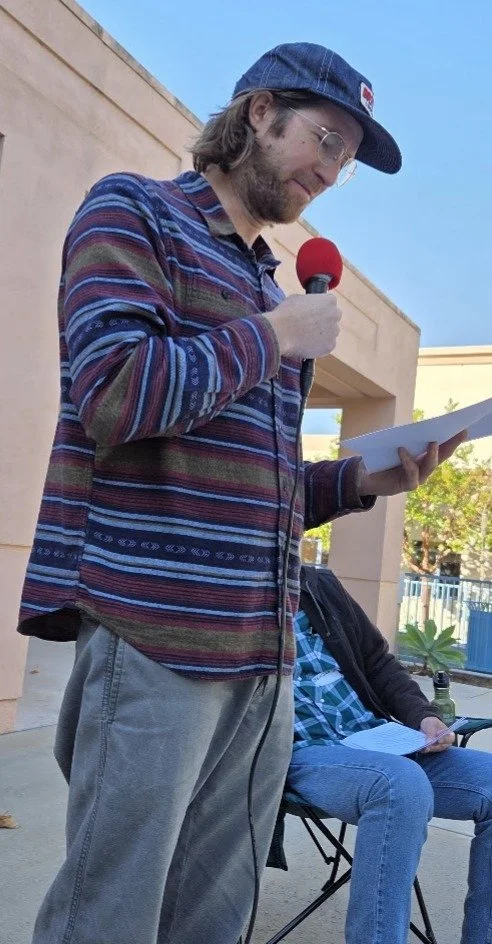
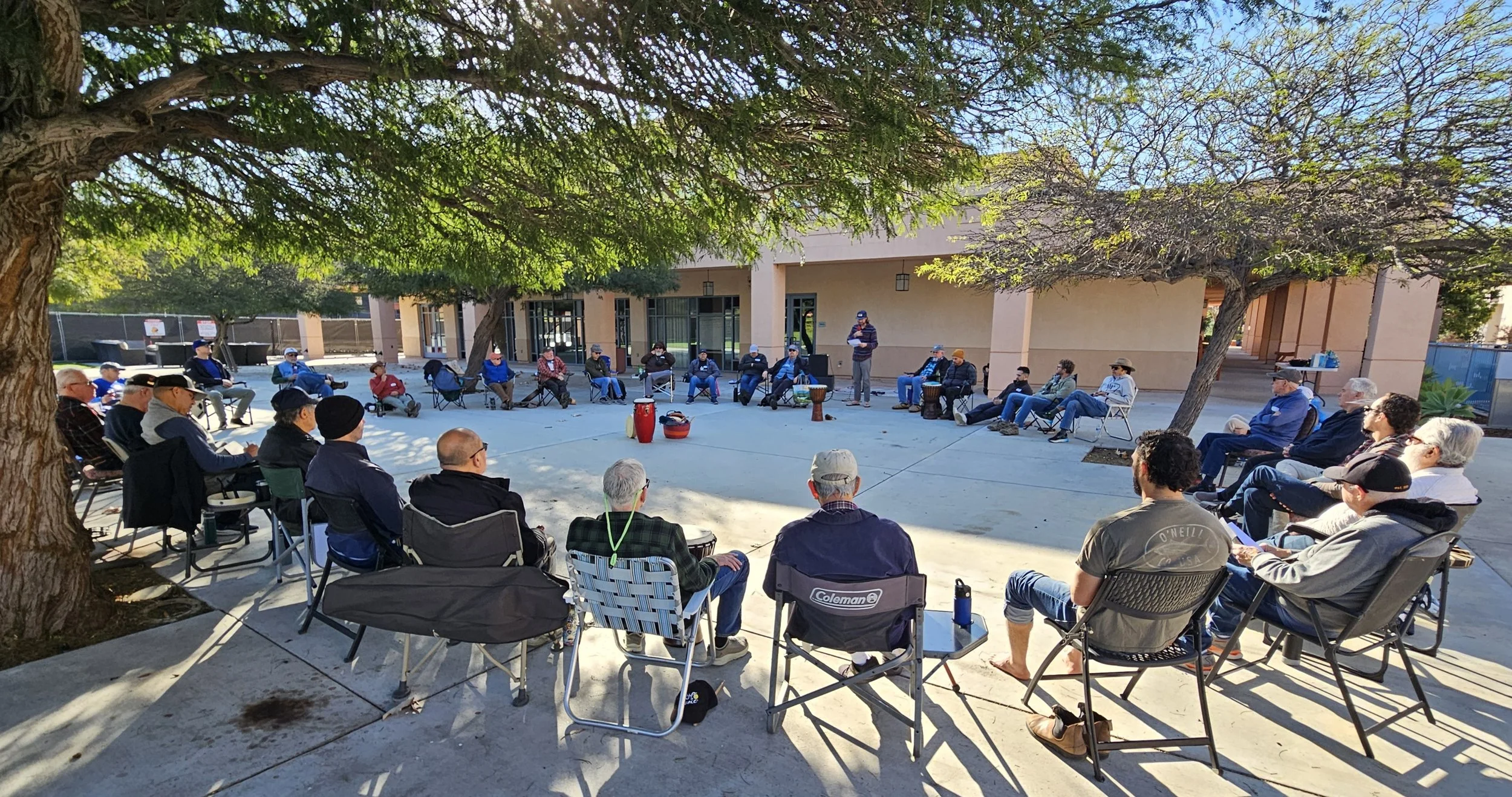
I love the way the theme for our recent Illuman SoCal regional gathering was worded: “There is space for silence.” I like that it isn't like a command. It isn’t just an abstract word or idea, but a declaration of reality: there is space for silence. There is…space…for silence.
This is a reminder I’m willing to bet that all of us need. Because in our culture, in this time and place in America, 2026, with screens and speakers and internet access everywhere – all this media and these stimulations and distractions constantly available to us – silence isn’t our default. It’s noise in some form, whether music or text messages or social media or Netflix, working on our to-do list, or even being “productive”. And even for those of us with the wherewithal to know that we need silence, it can be elusive and difficult to find – much less experience.
The hope and the encouragement that I hold and want to share is that silence is possible. There is space for it. And I hope we can carve out a little more space, whatever that looks like for each one of us today.
Before going any further, I’d first like to share a disclaimer that I consider myself a beginner when it comes to making space for silence. If I’m honest, in recent years I have felt like a backslider, someone who has gone in the opposite direction that I want to go, when it comes to my relationship with silence. But there are some ways that I have, haphazardly over the years, managed to make it into a practice in my life. So, I’d like to share some of the lessons I’ve learned along the way – along with some insights from others who have much more wisdom to offer from their experiences.
Let’s start with a quote from the German theologian Dietrich Bonhoeffer: “The mark of solitude is silence, as speech is the mark of community… Right speech comes out of silence, and right silence comes out of speech.”
To me this powerfully answers the “why” question when it comes to the value of silence. Bonhoeffer describes a rhythm, this reciprocal relationship between speech and silence: “Right speech comes out of silence, and right silence comes out of speech.” In other words, silence is just as natural and necessary as any other life-sustaining rhythm. Just as with our breath, there is inhaling and exhaling. Just as with a drum, there is space between each beat. So silence is a natural part of how we live and move and have our being. From a place of silence we speak with greater wisdom, love, and authenticity. In and out, in and out. As the Preacher in the ancient Hebrew wisdom book of Ecclesiastes says, there is a time to speak, and a time to keep silent. The wise man is able to discern one from the other. We need silence just as much as we need speech.
Knowing this need for silence in my own life, over the past six months I have begun attending a monthly centering prayer group, where participants sit in silence together for increments of 30 minutes at a time. At the heart of this practice of centering prayer is consenting to the presence of the divine. The intention is to empty the mind, to be in a place of receptivity, of not thinking about anything in particular at all. To help with this, each participant is asked to choose a sacred word that they can repeat to themselves and return to when they find their mind wandering. The word doesn’t have to mean anything in particular. It simply serves as a touchstone to come back to.
In my brief time of experiencing centering prayer, there are three things I’ve discovered that silence offers.
The first thing I noticed is that I found that silence has the power to expose and even heal harmful and destructive cycles. It disrupts our reactivity and our addictions. For example, I remember during the first 30-minute period of centering prayer that I sat in, it was bliss for about 10 seconds. But then, what our Buddhist friends call the “monkey mind” kicked in. I felt trapped, I had this sinking feeling, “Oh, maybe this was a mistake. This is going to be a long-ass 30 minutes.”
And it was. By day I’m a high school teacher. I read the news. I’m generally a pretty busy guy. And immediately my mind jumped to to-do lists, a situation with a student, lesson plans, the headlines I’d read yesterday – all this stuff.
But I found that every time I had the wherewithal to come back to my sacred word – in other words, to make space for silence – I was disrupting an addictive habit. When I would otherwise be able to satisfy my mind’s impulse – open my planner, send a text, take care of a chore, browse Instagram, or whatever I needed to do to get that dopamine hit – sitting in silence disrupted the impulse. It jarred me back into a simple presence, and I discovered for a sweet moment that I was okay. I didn’t need that “hit” of distraction or stimulation.
Of course, a minute later, the monkey mind was at it again, chasing after this or that thought. And again, I’d have to return to my sacred word, letting silence interrupt that thought. Sometimes I’d catch my mind wandering right away, other times I’d find myself well into an imaginary conversation with someone in my head. But I kept making that return to silence.
I didn’t walk away from this centering prayer experience healed of my addictions and distracting tendencies, but it did open up this hopeful possibility for me. If I can pause when the addictive impulse for distraction hits (and it is an addiction), if I can make space for silence in the midst of that, then beautiful new horizons open up to me.
The lesson here really is a simple one: if and when you find yourself caught in a harmful cycle – maybe it’s a reactive anger, an addiction of some form, or even workaholism, the drive to be “productive” with every moment of your day – just stop.
Stop. Take a “holy pause.” Make space for silence.
My hunch is that if we can do this, we will find, as Bonhoeffer says, that “(t)here is a wonderful power of clarification, purification, and concentration upon the essential thing in being quiet.”
So that’s the first lesson, making space for silence can help disrupt the harmful cycles in our lives.
Here’s another lesson that I’ve learned about silence: it offers a powerful barometer for the inner life – the state of the soul.
Making space for silence gives us an “internal weather report,” of sorts, that we would otherwise be blind to.
I experienced this on another occasion of centering prayer. This time, I “failed” to return to my sacred word hardly at all. The monkey mind ran wild. The entire time, I found myself seething with anger. I felt a helpless rage toward a certain political figure that I believed was corrupt and perpetuating injustice. And I felt anger towards several of my students who I was having trouble with at the time. My mind and heart burned as I imagined how I wanted to give these people a piece of my mind. I wanted to scream or break something. But I made it through the prayer time, sitting in silence.
At that point, the temptation was to feel like I had “failed” at centering prayer. I hadn’t returned to my sacred word. I hadn’t emptied my mind or intentionally consented to the presence of God or any of the idealistic things one aspires to in centering prayer. I felt like I’d had no inner silence at all. But the truth was that I hadn’t failed. The act of sitting in silence had given me this internal weather report, this loud and clear barometric reading of the state of my soul. I was carrying all this anger, this sense of helpless frustration, and I hadn’t even realized it.
But in the silence, this hidden anger surfaced. I came to see myself more clearly. Over the next week, I was able to have some fruitful conversations – I suspect this is an example of the “right speech” Bonhoeffer had in mind that emerges from silence. I started processing my anger and moving through it, rather than keeping it all stuffed up inside. I stepped into my life with more clarity and intention. But I needed silence to start that work.
So there’s the second lesson: making space for silence allows us to see the state of our own hearts and souls.
The final piece of wisdom I have to share is that making space for silence gives us the gift of loving presence.
I found this, once again, during a time of centering prayer. Let me explain what I mean.
As the sequence of 30 minute sits dragged on, I found myself getting tired of wrenching my mind away from its wanderings back to the emptying of a sacred word. I felt too mentally and spiritually burnt out for that kind of discipline. At the time I was nearing the end of a school semester and running on fumes.
Once again, the temptation was to judge my attempted silence as a failure: unfocused, undisciplined, full of distractions. But then I sensed this whispering. I would call it the Holy Spirit (other spiritual traditions might call it my “Inner Light” or “Higher Power”). Whatever the case, I was offered this beautiful reframing of what it means to make space for silence. This voice, a deep inner knowing, reminded me that the practice of sitting in silence is actually an invitation to rest.
In silence, it isn’t a matter of working to wrench my mind back to a certain state so much as an opportunity to give myself a break from all the burdens I carry and all the work that I do. I sensed my soul being offered rest. In the space of silence I didn’t have to think about my lesson plans for next week, or the stack of essays I had to grade, or what to text back to my mother, or what to say to that person who’d been pissing me off. I could take a break from all that. I could lay down the thoughts that are so, so burdensome and let my heart and mind and soul simply rest.
This is perhaps the greatest gift of silence. It never judges you.
It doesn’t require performance or achievement of any kind. It’s given without condition or price or discrimination. There’s no “wrong” way to do it. You can’t screw it up.
It may be uncomfortable or painful or scary. But at the end of the day, silence is nothing but loving presence. Whatever you show up with, silence can hold it, and hold you, with perfect and complete acceptance. Silence always says “come as you are, I’m here.”
Do you see the gift here, brothers? The blessing that silence waits to offer? Too often, especially in our western worldview, silence gets defined in the negative, an absence of sound, and we don’t want anything “negative” in our lives. But as the priest and modern day mystic Cynthia Bourgeault says: “silence is not absence, but presence. It is a ‘something,’ not a nothing. It has substantiality, heft, force. You can lean into it, and it leans back. It meets you; it holds you up.”
This isn’t to say silence is without its pitfalls or genuine difficulties and struggles. To paraphrase Bonhoeffer: Silence can be a dreadful ordeal with all its desolation and terrors. It can also be a false paradise of self-deception. The latter is no better than the former. Be that as it may, I encourage you to not expect from silence anything but a direct encounter with God, for the sake of which you have entered into silence. But this encounter will be given to you. You cannot lay down any conditions as to what you expect or hope to get from this encounter. If you will simply accept it, your silence will be richly rewarded.
I’ll conclude with the words of one of the true spiritual masters of making space for silence, the Trappist monk Thomas Merton:
“To deliver oneself up, to hand oneself over, entrust oneself completely to the silence of a wide landscape of woods and hills, or sea, or desert; to sit still while the sun comes up over that land and fills its silences with light…This is a true and special vocation. There are few who are willing to belong completely to such silence, to let it soak into their bones, to breathe nothing but silence, to feed on silence, and to turn the very substance of their life into a living and vigilant silence.”
Brothers, may this be so for each one of us today and in the days to come. Here.
QUESTIONS:
● How would you describe your current relationship with silence?
● What do you hear when you make space for silence? Words of shame and condemnation? Love and comfort? Something in between?
● Share a story from your life about how making space for silence changed you.